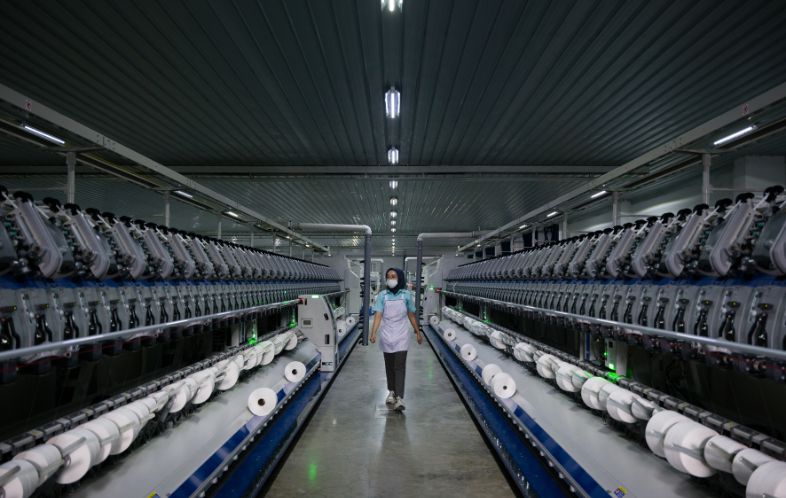
Comparing MVS, Ring Spinning, and Open-End for the Modern Textile Industry
In the ever-evolving textile industry, choosing a spinning system is no longer just about producing yarn, but also about determining production efficiency, fabric quality, and market product positioning. Today, many manufacturers are starting to compare MVS spinning, ring spinning, and open-end spinning to find the technology that best suits their production needs.
So, what exactly are the differences between the three, and which one is more optimal for the modern textile industry?
Why is Spinning System Selection So Crucial?
The spinning system plays a major role in determining the final character of the yarn, ranging from strength, hairiness, softness, to production speed. Choosing an unsuitable technology can lead to high production costs, inconsistent fabric quality, and low operational efficiency. Therefore, understanding the differences between MVS vs Ring Spinning vs Open-End Spinning is an essential step before deciding on the right textile production process.
Ring Spinning (The Quality Standard in Yarn Production)
Ring Spinning is one of the most conventional spinning methods and is still widely used today. This system works through a sequential process of drafting, twisting, and winding to produce yarn with a tighter and more stable fiber structure.
Characteristics of ring spinning
Produces yarn with high strength
Softer and more premium handfeel
Suitable for fine yarn and high-quality fabric
Flexible for various types of fibers
However, ring spinning also has several limitations.
Advantages and disadvantages of ring spinning Advantages:
Best yarn quality
High tensile strength
Suitable for premium textile products
Disadvantages:
Slower production speed
Relatively high energy consumption
Higher labor costs compared to modern systems
Ring spinning is generally used for products such as shirting, premium knitwear, high-quality denim, and fashion textiles.
Open-End Spinning (An Efficient Solution for Mass Production)
Open-End Spinning, or rotor spinning, was developed to increase productivity and reduce the complexity of the spinning process. This system eliminates several stages, such as roving, making the process faster and more cost-efficient.
Characteristics of open-end spinning
High production speed
Simpler process
Suitable for medium to coarse yarn counts (thicker and bulkier yarn sizes)
The resulting yarn has a bulkier and less compact structure compared to ring spinning.
Advantages and disadvantages of open-end spinning Advantages:
Production is 6-8 times faster than ring spinning
Better cost efficiency
Suitable for large volume production
Disadvantages:
Lower yarn strength
Rougher yarn surface
Less ideal for fine fabric
Open-end spinning is widely used for denim, towels, socks, cleaning textiles, and home textiles.
MVS Spinning (Modern Technology for Efficiency and Consistency)
MVS (Murata Vortex Spinning) has become one of the modern spinning technologies that is increasingly popular in the textile industry. This system uses an air vortex to form yarn with wrapper fibers on the outside and a more stable core fiber structure.
The result is a yarn with a cleaner, more uniform appearance, and minimal hairiness.
Characteristics of MVS spinning
Very low hairiness
More uniform yarn
Better anti-pilling performance
High production speed
MVS spinning is highly preferred by manufacturers who require a combination of quality and efficiency.
Advantages and disadvantages of MVS spinning
Advantages:
Fast and stable production
Cleaner yarn surface
Reduces pilling on fabric
Suitable for modern functional textiles
Disadvantages:
Handfeel tends to be crisper compared to ring spinning
Not all fibers are optimal for this system
MVS is suitable for activewear, sportswear, underwear, bed linen, and modern knitwear.
Comparison of MVS vs Ring Spinning vs Open-End Spinning
To help you choose the right spinning technology, here is a comparison of MVS Spinning, Ring Spinning, and Open-End Spinning across three main aspects of the modern textile industry.
| Aspect | MVS Spinning | Ring Spinning | Open-End Spinning |
| Quality | Excels in uniformity, low hairiness, and clean surface | Best softness with the highest strength | Good enough for functional and basic textiles |
| Production Efficiency | Very fast, modern, and efficient for high output | Slowest production with higher costs | Fast, economical, and suitable for large volumes |
| Application | Sportswear, knitwear, bed linen, and performance textiles | Premium apparel, denim, shirting, and fine textiles | Towels, socks, basic denim, and mass production textiles |
Which One is Best for the Modern Textile Industry?
There is no single spinning system that is superior for all needs. The best choice depends on your target market, fabric type, production budget, and the yarn quality you require.
If your focus is premium quality, Ring Spinning remains the primary choice. For cost efficiency and high volume, Open-End Spinning offers an economical solution. Meanwhile, for manufacturers who want a balance between speed, quality, and fabric performance, MVS Spinning stands as a highly relevant option for the modern textile industry.