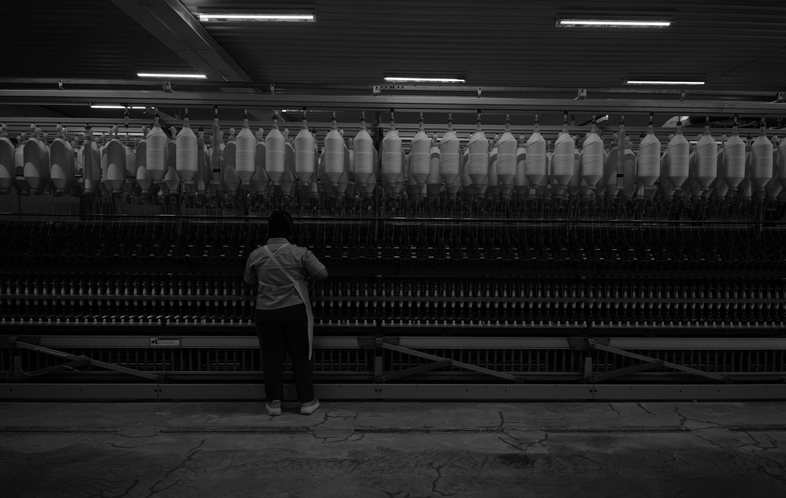
Understanding the Differences Between Ring Spinning, Open-End, and Rotor Spinning
If you’re choosing a spinning technology to produce quality yarn — should you prioritize fiber strength, production efficiency, or material flexibility?
In today’s modern textile industry, the choice of spinning system is not merely technical; it directly affects fabric performance, production speed, and overall costs.
That’s why it’s important to understand the key differences among the three most common technologies: ring spinning, open-end, and rotor spinning.
What Is Ring Spinning?
Working Principle
Ring spinning is the most conventional and oldest spinning method used in the textile industry. The system spins fibers mechanically through a ring and traveler, producing a strong and stable twist, as cited by Aysantex.
Yarn Characteristics
Produces fine and strong yarn.
Ideal for premium fabrics such as combed cotton, poplin, and high-end knitted fabrics.
Suitable for products requiring high comfort, such as premium t-shirts, babywear, and grade-A fashion apparel.
Advantages & Limitations
Advantages: most stable yarn quality, denser fibers, smooth finish.
Limitations: slower process, higher energy consumption.
Commonly used for premium-quality products rather than high-speed production.
What Is Open-End Spinning?
Working Principle
According to CN Hago, Open-End (also known as rotor spinning) uses a spinning process without a traditional spindle. The fibers are first separated and then spun directly inside a high-speed rotor.
Yarn Characteristics
Bulkier texture and slightly coarser feel than ring-spun yarn.
Commonly used for denim, workwear, towels, and basic mass-produced t-shirts.
Advantages & Limitations
Advantages: very fast process, lower production costs, suitable for high-volume output.
Limitations: lower strength and softness compared to ring-spun yarn.
The primary choice for mass production and industrial applications.
What Is Rotor Spinning (and How Does It Differ from Open-End?)
Short Explanation
Technically, rotor spinning is a specific form of open-end technology. Many manufacturers consider open-end and rotor systems the same, as both use a rotor instead of a spindle — according to Textile School.
Key Differences
In modern practices, rotor spinning often refers to a newer generation system — more stable, energy-efficient, and capable of producing semi-premium yarns.
Industrial Applications
Suitable for stretch denim, mélange yarns, and TC/CVC yarns for mid-range t-shirts.
Many modern mills are shifting to rotor spinning to reduce costs without sacrificing quality.
Ring Spinning vs Open-End vs Rotor: Which One Is Right for You?
Ring Spinning
- For high-end textile quality
- Ideal for premium fashion brands
- Prioritizes softness and comfort
Open-End
- For mass production
- Focuses on speed and efficiency
- Examples: basic t-shirts, industrial uniforms
Rotor Spinning
- The “middle ground” between quality and efficiency
- Used by semi-premium to industrial-level brands
- Suitable for blended and functional yarns
Ultimately, the best choice depends on your product positioning, whether you focus on high-end, industrial, or balanced performance and efficiency.
For the best textile products and expert spinning recommendations, please contact Danar Mas Group.