Why Has the Fashion Industry Become the Largest Contributor to Textile Waste?
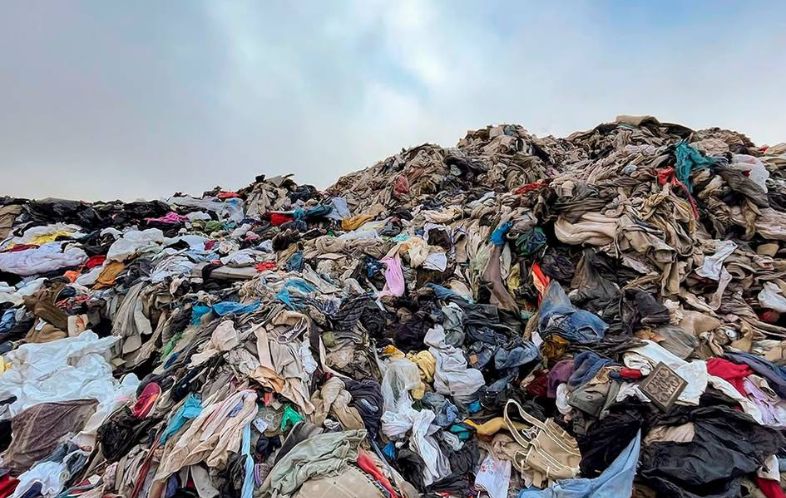
The fashion industry continues to grow rapidly, keeping pace with trends, seasons, and dynamic market demands. However, behind this growth lies a major challenge that is gaining increasing global attention: textile waste. Every year, millions of tons of textile materials are generated from the production process down to clothing consumption. In fact, according to the latest data from the United Nations Environment Programme (UNEP), the world produces about 92 million tons of textile waste per year.
So, why has the fashion industry become one of the largest contributors to this issue?
The Scale of the Problem: How Large is Global Textile Waste?
Hard-to-imagine numbers
Out of the 100 billion garments produced globally each year, around 92 million tons end up in landfills, equivalent to one full garbage truck of clothes every second. If this trend continues without intervention, the volume of textile waste is projected to surge to 134 million tons per year by the end of the decade.
Conditions in Indonesia
Indonesia is not merely a spectator in this crisis. Based on a report by the Global Green Growth Institute (GGGI), national textile waste accumulation has reached 2.3 million tons per year and has the potential to increase by up to 70 percent in the coming years if no intervention is made. In fact, Indonesia is projected to produce 3.9 million tons of textile waste by 2030, placing Indonesia as the country with the second-highest level of water pollution caused by the textile industry among G20 nations.
Why is the Fashion Industry the Largest Contributor?
Fast fashion culture drives overconsumption
One of the biggest root problems is the fast fashion business model, which involves producing clothing in massive quantities, at low prices, and with extremely rapid trend turnover. On average, consumers discard their clothes a year after purchase, following constantly changing styles and leaving behind outdated trends. In Indonesia itself, YouGov data notes that 66% of adults discard at least one piece of clothing a year, and even three in ten Indonesians have discarded clothes after wearing them only once.
Overproduction
Not only do consumers contribute, but the industry itself produces far beyond demand. According to a report by the United Nations Environment Programme (UNEP), global clothing production has more than doubled since 2000, bringing impacts such as pollution, climate change, and increasingly massive natural resource consumption.
Recycling infrastructure is still far behind
Unfortunately, solutions are not yet moving as fast as the problem. Globally, only 8 percent of textile fibers come from recycled materials, and textile-to-textile recycling practices remain highly limited, at under 1 percent. Global textile recycling infrastructure and technology are not yet able to keep up with the large volume of waste generated, meaning that recycling potential is not being utilized to the maximum.
Read also: 5 Recycling Innovations in the Textile Industry That Industry Players Must Know
How Can the Fashion Industry Reduce Textile Waste?
Reducing textile waste requires collaboration from across the entire ecosystem, ranging from producers and brands to consumers.
More efficient production
- Brands can reduce waste by:
- Optimizing pattern cutting
- More accurate demand forecasting
- Better inventory management
- Utilizing production waste materials
These steps help reduce waste from the early stages.
Wiser consumption
On the other hand, consumers also play a crucial role through more planned purchasing decisions, optimal use of products, and reusing the clothes they own. With a comprehensive approach, the fashion industry can move towards a more efficient system while remaining relevant to the needs of the modern market.
The issue of textile waste in the fashion industry is not only about the number of clothes thrown away, but also about how the industry manages production, distribution, and consumption more optimally. What do you think, what is the most effective step to reduce textile waste in the fashion industry, especially in Indonesia?