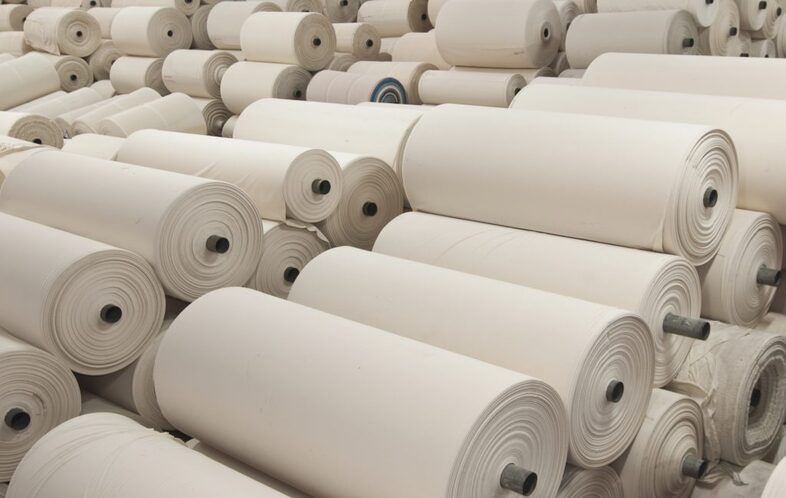
Why Does Greige Woven Fabric Feel Stiff? Here’s the Explanation
When looking at woven fabric in its greige state, some people may assume that the fabric should feel soft because it has not yet undergone any finishing process. In reality, however, many greige fabrics tend to feel stiffer than fabrics that have already been further processed. This happens for a reason. In the textile industry, the presence of sizing agents, waxes, oils, and natural impurities on the fabric surface plays a significant role in determining the handfeel of greige fabric.
So, what exactly happens to woven fabric before it enters the dyeing and finishing stages?
What Are Woven Fabric and Greige Fabric?
Understanding Woven Fabric
Woven fabric is produced by interlacing warp and weft yarns through a weaving process. Compared to knitted fabrics, woven fabrics generally offer greater stability and strength, making them widely used for:
- Fashion apparel
- Uniforms
- Home textiles
- Industrial textiles
What Is Greige Fabric?
Greige fabric, also known as grey fabric, is woven fabric in its unfinished state before undergoing any finishing processes. At this stage, the fabric has typically not been subjected to:
- Washing
- Dyeing
- Coating
- Resin finishing
- Heat setting
- Calendaring
As a result, the fabric's characteristics are still heavily influenced by the original yarn properties and woven construction.
Why Does Greige Woven Fabric Feel Stiff?
It Still Contains Sizing Agents
One of the primary reasons greige woven fabric feels stiff is the presence of sizing agents applied during the weaving process.
During weaving, particularly on warp yarns, sizing is used to improve yarn strength and reduce the risk of yarn breakage while passing through the weaving machine. After weaving is completed, a portion of the sizing material remains on the fabric surface.
As a result, greige fabric often feels:
- Stiffer
- Drier to the touch
- Less flexible than further processed fabrics
It Still Contains Wax, Oil, and Natural Fiber Impurities
In addition to sizing agents, greige fabric also contains various natural substances and production residues, including:
- Natural waxes
- Lubricating oils from spinning and weaving processes
- Pectin
- Natural impurities from plant fibers
These substances remain on the fiber surface and affect the fabric's overall characteristics. Not only do they contribute to a stiffer handfeel, but they also reduce the fabric's absorbency.
This is why greige fabric is not yet suitable for immediate dyeing.
The Fabric Becomes Softer After Desizing and Scouring
Before entering the dyeing and finishing stages, woven fabric typically undergoes a preparation stage commonly referred to as the Continuous Process.
This stage generally includes:
- Desizing, the removal of sizing agents remaining on the fabric.
- Scouring, the removal of waxes, oils, fats, pectin, and other impurities from the fiber surface.
After these processes are completed, the fabric undergoes significant improvements, becoming:
- Softer
- More flexible
- Cleaner
- More absorbent
- Better prepared for uniform dye uptake
This is why fabric handfeel often becomes noticeably more comfortable after preparation processes compared to its original greige state.
Read also: What Are the Advantages of Open-End Yarn? Here's Why the Textile Industry Uses It Extensively
Fiber Type Also Affects Fabric Handfeel
Cotton and Rayon Fibers Tend to Feel Softer
Not all woven fabrics behave the same way. Fiber composition plays a major role in determining the final handfeel of a fabric.
Materials such as cotton combed, viscose rayon, TENCEL™, and modal generally produce greige fabrics with a softer feel, even before finishing.
High-Density Polyester Can Feel Stiffer
On the other hand, woven fabrics made from high-density polyester often feel firmer even at the greige stage. This is influenced by several factors, including:
- Filament type
- Fabric density
- Yarn construction
- Weaving technique
Therefore, the characteristics of woven fabric cannot be determined solely by the weaving process itself.
Continuous Processing and Finishing Determine the Final Fabric Characteristics
The final performance of a fabric is determined not only by yarn selection and woven construction but also by the series of processes carried out after weaving.
Once desizing and scouring are completed, the fabric becomes cleaner and more flexible, making it ready for dyeing and finishing. During the finishing stage, fabric characteristics can be further engineered to achieve specific performance requirements, whether the goal is a softer handfeel, greater stiffness, smoother texture, or specialized functional properties.
For this reason, fabric quality depends not only on the weaving process but also on the subsequent treatments applied afterward.
For high-quality textile products manufactured under standardized production processes, contact Danar Mas Group. We are ready to help you find the best textile solutions tailored to your business needs.