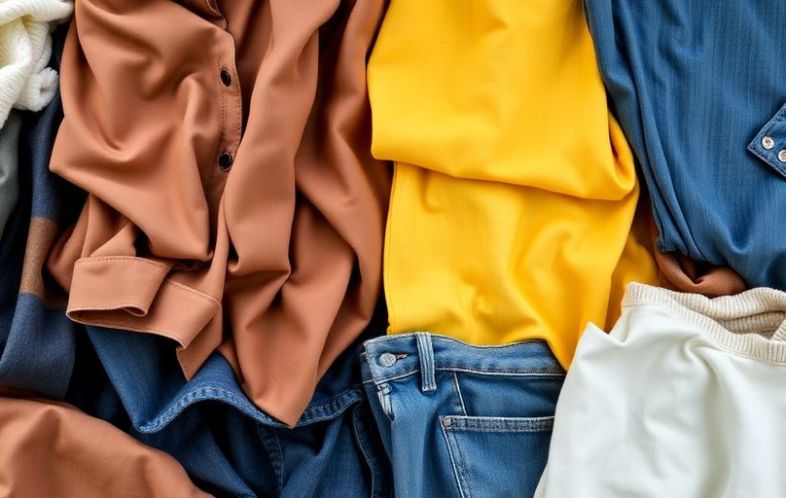
What Is the Garment Industry? Check Out Garment Facts and the Differences Between Textiles & Convection
How does a raw piece of fabric transform into the crisp shirt you are wearing to work today? Behind the comfort of our clothing lies a vast, tireless ecosystem. However, we often confuse the terms "textile" and "garment," even though they play very different roles on the production floor.
Let’s dive deeper into this industry so you don't make the wrong choice when you want to produce your own clothing.
What Is the Garment Industry?
The garment industry is a sector engaged in the manufacturing of ready-to-wear clothing, ranging from cutting and sewing to the finishing of ready-to-use products. Garments are the final stage of the apparel production chain, where prepared fabric is processed into clothing that consumers can wear immediately. Garment products include uniforms, casual wear, sportswear, and Muslim fashion, which has now become one of Indonesia's export mainstays.
Important facts about Indonesia's garment industry
The garment industry is not just a sewing business. It is a strategic sector that sustains the national economy. Here are some current facts you need to know:
3 main stages of production: Every garment product goes through three core processes: cutting (fabric cutting), sewing, and finishing (completion & quality control).
Raw materials determine quality: The quality of garment products depends heavily on the type of textile material used, ranging from cotton, polyester, and rayon to blended fabrics.
Garments differ from regular convection: The garment industry covers mass production scale with international standards, unlike home-based convection which generally serves small quantity orders.
The garment sector is also known for being resilient in facing various global economic pressures. Many Indonesian garment companies have been serving well-known international brands for decades, proving the competitiveness of domestic production quality in the global market.
The Difference Between Garments, Textiles, & Convection, Which Comes First?
This question is often confusing. Simply put, textiles are the raw materials, while garments are the finished products. Both are interrelated in one production chain called the TPT (Textile and Textile Products) industry.
| Aspect | Textile | Garment | Convection |
| Definition | Processed fabric or fiber materials | Finished clothing resulting from fabric processing | Finished clothing resulting from limited-scale orders |
| Position in production chain | Upstream | Downstream | Downstream |
| Product examples | Cotton, rayon, polyester, denim fabrics | Shirts, uniforms, jackets, Muslim fashion | Community t-shirts, office uniforms, class jackets |
| Main processes | Spinning, weaving, dyeing | Cutting, sewing, finishing | Cutting, sewing, finishing |
| End consumers | Garment factories & industry | Retail consumers & fashion brands | Communities, institutions, & custom orderers |
Indonesia has a rare advantage: a complete upstream-to-downstream textile production chain, from yarn spinning to finished clothing. Not many countries in the world have an industrial ecosystem like this.
Read also: Why Local Brands Are Gaining Popularity and Competing with Foreign Brands
Current Trends and Opportunities in the Garment Industry
Digital transformation on the production floor
Indonesia's garment industry is moving quickly towards digitalization. Sewing robots, automatic cutting machines, and AI-based systems to predict demand are starting to be implemented in various factories. We see this transformation not just as a trend, but as a necessity for local industry players to compete in an increasingly competitive global market.
Eco-friendly garments and global certification
Global consumers are now increasingly concerned about production processes. International brands are starting to require environmental certifications such as OEKO-TEX and ISO 14001. This is an opportunity for Indonesian textile and garment producers who have implemented sustainable production standards to level up to the premium market.
Export markets are increasingly diverse, from the US to the Middle East
In addition to the United States and Europe, which have been the main markets so far, Indonesia is now actively targeting non-traditional markets such as the Middle East and Asian countries. The Ministry of Industry continues to encourage this market diversification as a long-term export strategy so that the national garment industry does not depend on only one region.
Understanding the ins and outs and facts of garments provides a new perspective that a piece of clothing is the result of hard work, technology, and human dedication. By knowing the difference between textiles and garments, you can now be wiser in determining the quality standards of the clothing you desire.