Business Matching at Textile Exhibitions: Strategies to Secure Quality Partners
Have you ever participated in a textile exhibition, only to return with a stack of business cards and no clear follow-up? This is where business matching at textile exhibitions makes the difference; it’s not just about meeting people, but meeting the right people. Instead of relying on random booth traffic, B2B matching is designed to connect you with buyers, distributors, or partners who are truly relevant to your business.
The result? Less wasted time and a higher chance of closing deals. Check out the information below for tips on preparing your strategy when visiting textile exhibitions to ensure you secure high-quality business partners.
What is Business Matching in Textile Exhibitions?
A structured, needs-based approach
Business matching is a curated process of scheduling business meetings between exhibitors and potential buyers based on profile compatibility and business objectives.
In a textile exhibition, this process typically connects fabric manufacturers with fashion or garment brands, raw material suppliers with manufacturers, or textile technology providers with investors and distributors. Everyone is brought together not by chance, but based on mutually complementary needs.
Why is this more effective than regular networking?
More directed and high-quality interactions
Unlike conventional networking that relies on happenstance, matching operates through a data-driven approach. Participant profiles, business preferences, and potential requirements are analyzed to create highly relevant encounters.
How Does the Business Matching Process Work?
The matching process generally begins with filling out a detailed business profile, including product categories, production capacity, and target markets. This data is then used by a system or a curator to match needs between participants.
Afterward, participants can schedule meetings with recommended parties. These meetings are usually brief but intensive, allowing discussions to dive straight into partnership opportunities. Once the session concludes, meeting results can be evaluated and followed up on with a more targeted approach.
Read also: Hidden Benefits of Joining Textile Expo for Textile Industry Growth 2026
Success Strategies for Textile Exhibition Business Matching
Build a clear and specific profile
Your business profile is the starting point of the entire matching process. The more clearly you explain your advantages, capacity, and market focus, the higher your chances of being matched with the right partner.Focus on relevant meetings
Not every meeting request needs to be accepted. Selecting potential partners that align with your business targets will increase your time efficiency throughout the exhibition.Prepare a short & clear pitch
With limited meeting time, the best approach is to immediately offer relevant solutions. Demonstrate concretely how your product or service can address their specific needs.Follow up quickly & accurately
Many business opportunities stall not because of a bad meeting, but due to delayed follow-up. Following up on the conversation with a clear proposal will significantly increase the likelihood of a partnership.
Business Matching as a Long-Term Strategy
A modern approach also demands a different method of evaluation. It’s no longer just about counting how many business cards were collected, but how many meetings actually progress into business opportunities.
By viewing results through measurable metrics, you can transform exhibitions into a strategic investment rather than just a routine activity.
Here is the English translation of your article draft, maintaining the original layout and structure.
Business Matching at Textile Exhibitions: Strategies to Secure Quality Partners
Have you ever participated in a textile exhibition, only to return with a stack of business cards and no clear follow-up? This is where business matching at textile exhibitions makes the difference; it’s not just about meeting people, but meeting the right people. Instead of relying on random booth traffic, B2B matching is designed to connect you with buyers, distributors, or partners who are truly relevant to your business.
The result? Less wasted time and a higher chance of closing deals. Check out the information below for tips on preparing your strategy when visiting textile exhibitions to ensure you secure high-quality business partners.
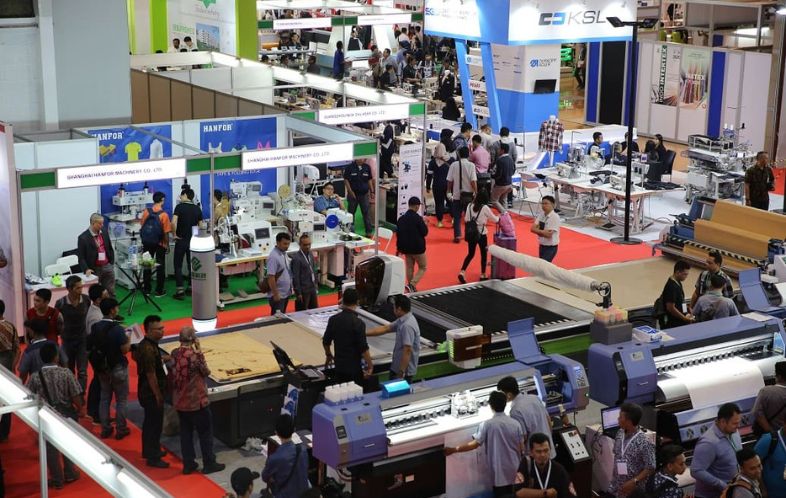
Image Source: Tabloid Bintang
What is Business Matching in Textile Exhibitions?
A structured, needs-based approach Business matching is a curated process of scheduling business meetings between exhibitors and potential buyers based on profile compatibility and business objectives.
In a textile exhibition, this process typically connects fabric manufacturers with fashion or garment brands, raw material suppliers with manufacturers, or textile technology providers with investors and distributors. Everyone is brought together not by chance, but based on mutually complementary needs.
Why is this more effective than regular networking?
More directed and high-quality interactions Unlike conventional networking that relies on happenstance, matching operates through a data-driven approach. Participant profiles, business preferences, and potential requirements are analyzed to create highly relevant encounters.
How Does the Business Matching Process Work?
The matching process generally begins with filling out a detailed business profile, including product categories, production capacity, and target markets. This data is then used by a system or a curator to match needs between participants.
Afterward, participants can schedule meetings with recommended parties. These meetings are usually brief but intensive, allowing discussions to dive straight into partnership opportunities. Once the session concludes, meeting results can be evaluated and followed up on with a more targeted approach.
Read also: Indo Intertex, the Premier Event for the Textile and Garment Industry in Indonesia
Success Strategies for Textile Exhibition Business Matching
Build a clear and specific profile Your business profile is the starting point of the entire matching process. The more clearly you explain your advantages, capacity, and market focus, the higher your chances of being matched with the right partner.
Focus on relevant meetings Not every meeting request needs to be accepted. Selecting potential partners that align with your business targets will increase your time efficiency throughout the exhibition.
Prepare a short & clear pitch With limited meeting time, the best approach is to immediately offer relevant solutions. Demonstrate concretely how your product or service can address their specific needs.
Follow up quickly & accurately Many business opportunities stall not because of a bad meeting, but due to delayed follow-up. Following up on the conversation with a clear proposal will significantly increase the likelihood of a partnership.
Image Source: ChiuVention
Business Matching as a Long-Term Strategy
A modern approach also demands a different method of evaluation. It’s no longer just about counting how many business cards were collected, but how many meetings actually progress into business opportunities.
By viewing results through measurable metrics, you can transform exhibitions into a strategic investment rather than just a routine activity.
Attending a textile exhibition without a clear strategy often results in "busyness" without results. Conversely, by leveraging business matching at textile exhibitions, you can turn every meeting into a real opportunity that is more focused, relevant, and impactful for your business growth.
This year, Danar Mas Concern is also participating in Indo Intertex 2026 as part of the textile industry players providing quality products and solutions for textile market needs, and will certainly be utilizing the business matching sessions there.