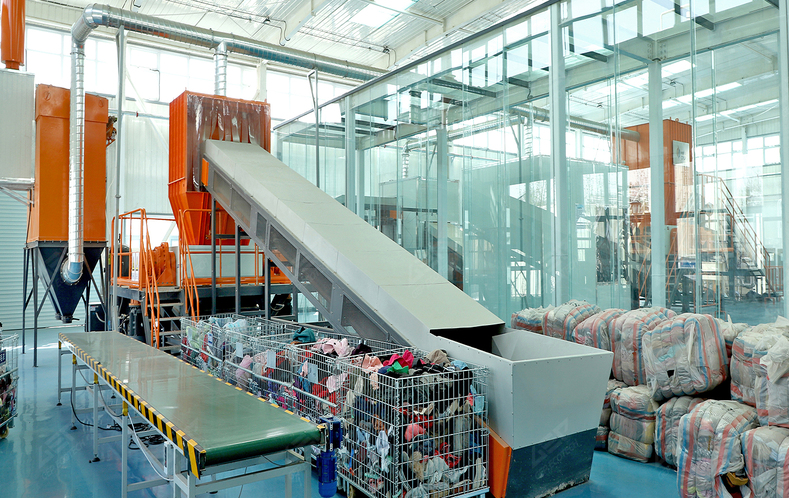
5 Recycling Innovations in the Textile Industry Every Industry Player Should Know
The global fashion industry generates massive amounts of waste every year, yet less than 1% of textile materials are truly recycled into new products. Amid growing sustainability pressures and stricter regulations, recycling technologies in the textile industry have become a strategic solution that industry players can no longer ignore.
We see this transformation not merely as a trend, but as a crucial step toward a more efficient and sustainable circular economy. Here are five key innovations you need to understand.
1. Mechanical Recycling
How It Works and Implementation
Mechanical recycling is the process of breaking down used fabrics and fibers into new fibers through techniques such as shredding, garnetting, and fiber opening—without the use of chemicals.
Latest Innovations
Although considered a conventional technology, modern machinery innovations have significantly improved the efficiency and quality of recycled fibers. This method remains the primary choice for materials such as cotton and wool.
Industry Insight
We recommend this method as a starting point because:
- It is relatively cost-effective
- Easy to implement in textile manufacturing
However, fiber quality typically decreases, making it necessary to blend with virgin fibers.
2. Chemical Recycling
How It Works and Implementation
Chemical recycling uses chemical reactions such as glycolysis, hydrolysis, and solvolysis to break down textile fibers into their base monomers or polymers. These can then be reprocessed into new fibers with virgin-like quality.
Latest Innovations
Technologies such as textile waste-based polyamide (loopamid) now enable the recycling of blended textiles, including materials that were previously difficult to process.
Industry Insight
We see this as one of the most promising textile recycling technologies in the long term because it:
- Produces high-quality fibers
- Supports closed-loop recycling
- Is suitable for large-scale industrial applications
3. Fiber-to-Fiber Recycling
How It Works and Implementation
Fiber-to-fiber recycling allows textile waste to be directly transformed into new fibers for garment production, ensuring that used materials do not end up as waste but instead continue circulating within a sustainable production cycle, with quality increasingly approaching that of new fibers.
Industry Development
Investment in this technology is growing rapidly, driven by the push toward a circular textile economy and rising demand for sustainable materials.
Challenges
- Processing blended fabrics remains complex
- Waste collection infrastructure is not yet optimal
However, this technology is becoming a fundamental pillar of the future textile industry.
4. Closed-Loop Dyeing & Water Recycling
How It Works and Implementation
Closed-loop dyeing is a fabric coloring system that allows water and chemicals to be reused within a closed cycle. Wastewater from the dyeing process is filtered, purified, and reused.
Key Benefits
- Significantly reduces water consumption
- Minimizes hazardous liquid waste
- Lowers long-term operational costs
Industry Relevance
We consider this innovation highly critical, as dyeing is one of the largest sources of waste in the textile industry. By adopting this system, you not only improve efficiency but also strengthen your sustainability commitment.
5. Thermal Recycling
How It Works and Implementation
Thermal recycling involves processing textile waste through controlled combustion to generate energy, such as heat or electricity. This allows materials that cannot be recycled mechanically or chemically to still be utilized.
Key Benefits
- Significantly reduces textile waste volume
- Generates alternative energy for industrial operations
- Provides a solution for hard-to-recycle materials
Key Considerations
While effective in waste reduction, this method is not considered closed-loop recycling, as it does not produce new textile materials. Additionally, carbon emission management remains a critical concern to minimize environmental impact.
The shift toward recycling technologies in the textile industry is no longer optional—it is essential. With rising global textile waste and increasing sustainability demands, industry players must begin adopting the right technologies, from mechanical and chemical recycling to closed-loop dyeing systems.
We believe that the combination of these innovations will drive production efficiency while creating new value from textile waste.